Introduction
Quality is no longer judged only by what happens on the production line. It now spans design, suppliers, delivery, service and the everyday experience of the customer. As manufacturing becomes more connected and data-rich, the challenge is to turn that information into earlier insight and better decisions. This is a topic manufacturers will be exploring at the European Manufacturing Summit, where industry leaders will discuss how to build more reliable, resilient and customer-focused operations.
Among the speakers is Brigitte Begasse, SVP, Customer Satisfaction and Quality at Schneider Electric. Brigitte leads a global team of more than 6,000 people, covering customer experience, quality, reliability and safety across the company's operations. In this Spotlight, she explains how AI and real-time data can shorten the path from signal to action, how digital twins and traceability help identify risks sooner, and why human expertise remains essential as quality becomes increasingly automated.

Could you begin with a brief introduction about yourself, and an overview of your responsibilities as SVP, Customer Satisfaction and Quality at Schneider Electric?
I lead Customer Satisfaction and Quality at Schneider Electric. My responsibility spans customer experience, quality, reliability and safety across our global operations. A big part of our mission today is using data, predictive capabilities and automation to anticipate risks earlier and continuously improve the experience we deliver to our customers.
Can you share a glimpse of Customer Satisfaction and Quality function in Schneider Electric?
In Schneider Electric, we are a team of almost 6000+ people mandated to offer seamless end-to-end experience to our customers. Customer Satisfaction and Quality is really an end-to-end function. It brings together customer experience and support with supplier and manufacturing quality, safety and reliability, quality systems, conformity, software and digital quality, and continuous improvement. This allows us to look at quality across the complete journey, from our offers and operations through to delivery and the customer.
How can real-time data and AI help organizations detect risks earlier and make faster, more effective quality decisions?
Manufacturers generate enormous amounts of data across factories, products, suppliers, service and customer feedback. AI powered tools can connect these signals, recognize patterns and highlight risks that may otherwise go unnoticed. The real value is shortening the journey from signal to insight, decision and action.
“The real value is shortening the journey from signal to insight, decision and action.”
How can manufacturers embed customer satisfaction into quality management across the entire lifecycle, from product design and manufacturing through to service?
Quality has to begin at design and follow the product throughout its lifecycle. That means learning continuously from manufacturing, suppliers, service activities and customer feedback, and feeding those lessons back into engineering and design. Quality then becomes a continuous loop of learning and improvement.
What role do digital traceability and greater data transparency play in strengthening supplier quality and managing risk across complex global manufacturing networks?
“Quality has to begin at design and follow the product throughout its lifecycle.”

The key is having information that is accessible, connected and understood in the right context. When engineering, manufacturing, supplier and field information can be connected, teams gain a clearer view of risk and can assess changes earlier instead of looking at individual events in isolation.
How can technologies such as advanced modelling and digital twins help identify quality and reliability risks earlier in the design and manufacturing process?
They help us build a more dynamic view of risk. By connecting process conditions, component behaviour, field stresses, environmental exposure and reliability assumptions, we can identify weak signals earlier. This helps shift quality from responding to visible failures toward anticipating what may be starting to go wrong.
“The best model combines the speed and scale of AI with experienced human decision-making. ”
As quality decisions become increasingly data-driven and automated, how can organizations balance technology with human expertise and judgment?
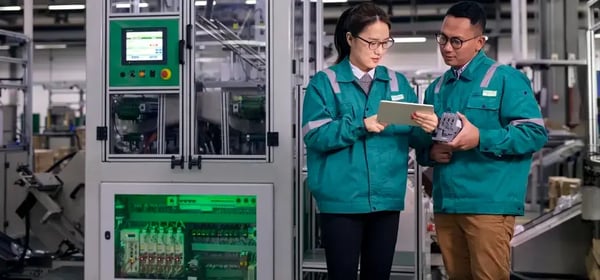
For me, technology should amplify expertise. AI can analyse information, recognize patterns and make knowledge easier to access, but experts bring context, judgment and accountability. The best model combines the speed and scale of AI with experienced human decision-making.
What does it take to scale successful quality innovations and continuous improvement practices consistently across different sites, functions, suppliers, and regions?

Scaling is not simply about deploying more technology. We need connected workflows, clear ownership and a way to share learning across sites and functions. AI can help make past data more widely available, while disciplined execution and change management turn that knowledge into consistent improvement.
Looking ahead, how do you see the role of quality evolving as predictive technologies, AI, and increasingly connected manufacturing systems become more mature?
The opportunity is to identify risks earlier, learn faster across engineering, manufacturing, suppliers, services and customers, and translate those insights into action. Ultimately, technology is the enabler; the goal remains safer, more reliable products and better customer experiences.
Conclusion
Brigitte's perspective highlights a clear theme: quality works best as a continuous loop of learning, starting at design and following the product through manufacturing, suppliers, service and the customer. Connected data, clear ownership and disciplined change management help turn isolated insights into consistent improvement, while AI and automation add speed and scale without replacing expert judgment.
These are the questions that make the European Manufacturing Summit a valuable meeting point for manufacturing leaders. By bringing together perspectives from across industries, the event offers a chance to share practical lessons, learn from different approaches and explore how predictive technologies can help deliver safer, more reliable products and better customer experiences.
Join the conversation: www.manusummiteu.com