%20(1).png?width=773&height=112&name=Generis%20Logo%20full%20Colour%20(Large)%20(1).png "Generis Logo full Colour (Large) (1)")
Explore insights from Georges Latil, Head of Supply Network, New Categories at BAT, on scaling supply chain capabilities through hypergrowth, balancing growth with operational efficiency, integrating supply chain earlier into innovation, and building agility, resilience, and operational excellence across complex global networks.
Join us at the European Supply Chain Summit, 20–21 October in Düsseldorf, to hear his full session and gain further insights into transforming supply chains for growth, complexity, and long-term resilience.
Let's begin with a brief introduction about Georges Latil, and an overview of his responsibilities as Head, Supply Network, New Categories at BAT!
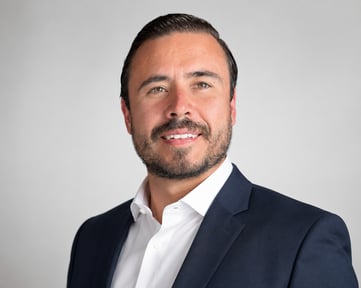 Georges Latil is a supply chain leader with 17 years of international experience transforming end-to-end operations across the FMCG industry. His career has taken him from Venezuela to Costa Rica, Switzerland, and the United Kingdom, where he has held local, regional, and global leadership roles, building resilient supply chains that enable growth in complex and rapidly evolving markets.
Today, Georges leads the global supply chain for one of the fastest-growing categories within British American Tobacco. He is heading a large-scale transformation of end-to-end processes, capabilities, and ways of working—combining operational excellence with a relentless focus on people, agility, and execution.
A passionate advocate of servant leadership, Georges believes the true role of a leader is not to create followers, but to create more leaders. He is driven by the conviction that supply chains are ultimately about people: connecting ideas, products, and consumers in meaningful ways. Venezuelan by heart, happily married, and father of two boys, Georges often jokes that parenting remains his most complex—and rewarding—supply chain challenge.
Modern oral has evolved from a challenger category into a global growth engine. What were the biggest supply chain lessons from that journey?
One of the biggest lessons was that scaling a business is never just about systems and processes.
Most transformations naturally focus on those areas because they're visible. You can launch a new planning process. You can implement a new technology. But the real differentiator is people.
We structured our approach around three pillars: People, Process and System. Looking back, people were probably the most important. There's an old saying that culture eats strategy for breakfast. As overused as it is, there's a lot of truth in it. We learned very quickly that unless people understand the direction, believe in it and actively support it, the best process and the best technology won't get you very far.
For us, people became the connective tissue between strategy and execution. They were the force that made everything else work.
What was the key to scaling supply planning while supporting such rapid growth?
Focus.
Hypergrowth creates an endless list of priorities. The challenge is deciding where you actually want to win.
We spent a lot of time segmenting the business and understanding what mattered most. Which markets were strategic? Which SKUs drove disproportionate value? Which factories were critical? Which innovation projects could move the needle?
Once you understand that, you can stop treating everything equally.
We deliberately created fast lanes for the areas where speed mattered most. That allowed us to respond quickly without creating unnecessary complexity across the entire organisation.
I think many companies try to optimise everything. We learned that the bigger advantage comes from knowing exactly where to focus.
How did you balance aggressive growth ambitions with operational efficiency?
That's probably one of the fundamental challenges of any modern supply chain.
On one side there's always pressure to support growth. On the other side there's pressure to avoid building excess inventory, excess capacity, or unnecessary cost into the network.
Supply chain sits right in the middle of those competing objectives.
Our role wasn't simply to execute decisions. It was to help the organisation understand the implications of those decisions. Every opportunity comes with trade-offs around service, cash and cost.
We spent a lot of time helping the wider business understand those trade-offs, ensuring decisions were taken with a clear view of risk and reward.
I've often seen supply chain as the lighthouse of the organisation. Commercial teams understandably focus on opportunities. Our role is to make sure everyone can also see the rocks.
"On one side there's always pressure to support growth. On the other side there's pressure to avoid building excess inventory, excess capacity, or unnecessary cost into the network.
Supply chain sits right in the middle of those competing objectives."
Your session will cover innovation and complexity. What have you learned about integrating supply chain into innovation?
The earlier supply chain gets involved, the better the outcome.
Historically, supply chain is often brought into innovation projects after many of the big decisions have already been made. At that point you're mainly reacting.
We've deliberately moved in the opposite direction.
We now involve supply chain much earlier in the innovation lifecycle, giving us the opportunity to influence network design, manufacturing strategies, sourcing decisions and deployment plans before they become constraints.
To support that, we created a dedicated capability that acts as a bridge between innovation teams and supply chain operations.
That connection has been incredibly valuable. It allows us to bring products to market faster while also making smarter decisions about how the network should support them.
Building agility, resilience and operational excellence simultaneously sounds ambitious. Where do organisations typically get it wrong?
Trying to do everything at once.
When you're growing rapidly there are always more improvement opportunities than available resources.
The most important thing we did was establish a clear Master Plan. We were very explicit about which capabilities could be built quickly, which would take time and where we expected the biggest impact.
You can't boil the ocean.
A good transformation isn't about doing more initiatives. It's about creating clarity around priorities and sequence. When people understand the plan and can see progress against it, alignment becomes much easier.
That clarity helped us move faster than if we had attempted to tackle everything simultaneously.
What advice would you give to supply chain leaders preparing for their next phase of growth?
Don't just scale your organisation. Scale your ecosystem.
No company grows alone. Suppliers, manufacturing partners, logistics providers, customers and technology partners all need to evolve alongside you.
One principle I've learned throughout my career is that there is always a bottleneck somewhere in the supply chain. The moment you solve one, another appears.
That's completely normal.
The goal isn't to eliminate bottlenecks forever. The goal is to build the capability to identify the next constraint before it limits growth.
The organisations that scale successfully aren't necessarily the ones with the most resources. They're the ones that continuously adapt their end-to-end network as the business evolves.
What can attendees expect from your session at the European Supply Chain Summit?
A practical perspective on what it takes to transform supply chain capabilities while a business is growing at extraordinary speed.
We'll discuss how we approached capability building across People, Process and System, how we managed increasing complexity, and some of the lessons learned along the way.
Most importantly, I'll share what worked, what didn't, and the decisions we would make differently with the benefit of hindsight.
Because in my experience, that's where the most useful learning usually comes from.
Our thanks to Georges Latil, Head of Supply Network, New Categories at BAT, for sharing his perspective on scaling supply chain capabilities through rapid growth, managing complexity, strengthening resilience, and aligning people, processes, systems, and partners around clear priorities.
We invite you to join us at the European Supply Chain Summit to hear his full session, learn from leading supply chain executives, and explore practical strategies for building more agile, resilient, and growth-ready supply networks.

-1.png)
-2.png)
-1.png)