%20(1).png?width=773&height=112&name=Generis%20Logo%20full%20Colour%20(Large)%20(1).png "Generis Logo full Colour (Large) (1)")
Introduction
Turning breakthrough ideas into products that can be manufactured at scale remains one of the biggest challenges in medtech today. As technologies evolve and expectations around speed, quality, and compliance continue to rise, process engineering plays an increasingly central role in bridging innovation and real-world delivery.
With more than 16 years of experience leading global engineering teams, Sophie Sheedy, Vice President of Process Engineering at Cochlear, sits at that critical intersection. Her work focuses on enabling organizations to move from concept to production seamlessly, leveraging automation, strengthening capabilities, and embedding continuous improvement across global manufacturing networks.
In this conversation ahead of the European Medical Device Summit, Sophie shares her perspective on how emerging technologies, AI governance, and real-world evidence are reshaping development - and what organizations must do to stay agile without compromising on safety or scale.

Could you begin with a brief introduction about yourself, and an overview of your responsibilities as VP, Process Engineering at Cochlear?
I am the Vice President of Process Engineering at Cochlear, with 16 years of experience leading global engineering organizations. I am accountable for translating innovation into scalable, world‑class manufacturing by partnering closely with R&D and operations to industrialize new products across multiple manufacturing sites. My role also encompasses driving enterprise‑level continuous improvement, automation, and capability building to accelerate development, reduce time to market, and strengthen operational performance. Through this work, my team enables sustainable growth and ensures Cochlear can reliably deliver life‑changing technology at global scale.
How are emerging technologies reshaping the way medical devices are conceived, developed, and brought to market?
Emerging technologies are reshaping medical device innovation in ways that fundamentally strengthen organizational capability and market responsiveness. Data from market research and customers is now democratized across functions, enabling evidence-based strategic decisions. Advanced design tools accelerate output review and trend analysis, while virtual reality enables cost-effective product introductions without capital-intensive infrastructure. Mobile technology supports rapid deployment of validated improvements directly to manufacturing environments. These advances don't just compress development timelines—they build organizational resilience by enabling process engineering teams to respond nimbly to evolving market needs. The result is a more agile, data-informed approach that brings innovative medical devices to patients faster.
With AI regulations continuing to evolve, how can organizations maintain agility in product development while ensuring compliance and patient safety?
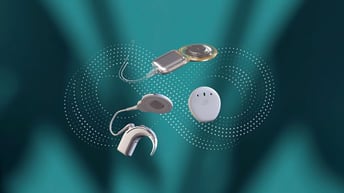 AI is transforming product development in medical devices, but regulatory complexity demands strategic governance. Organizations must establish clear risk frameworks that assess AI applications against patient safety requirements and evolving compliance landscapes. This means building organizational capability to evaluate each AI use case through a regulatory lens before deployment, then maintaining continuous monitoring as guidance evolves. The key is treating AI adoption not as a technology implementation but as a governance discipline—developing internal expertise to distinguish high-risk applications requiring rigorous validation from lower-risk tools that accelerate development. This approach enables innovation velocity while protecting patient safety and maintaining regulatory standing across jurisdictions
These advances don't just compress development timelines, they build organizational resilience
How do real-world evidence and data analytics inform design decisions and accelerate iteration during product development?
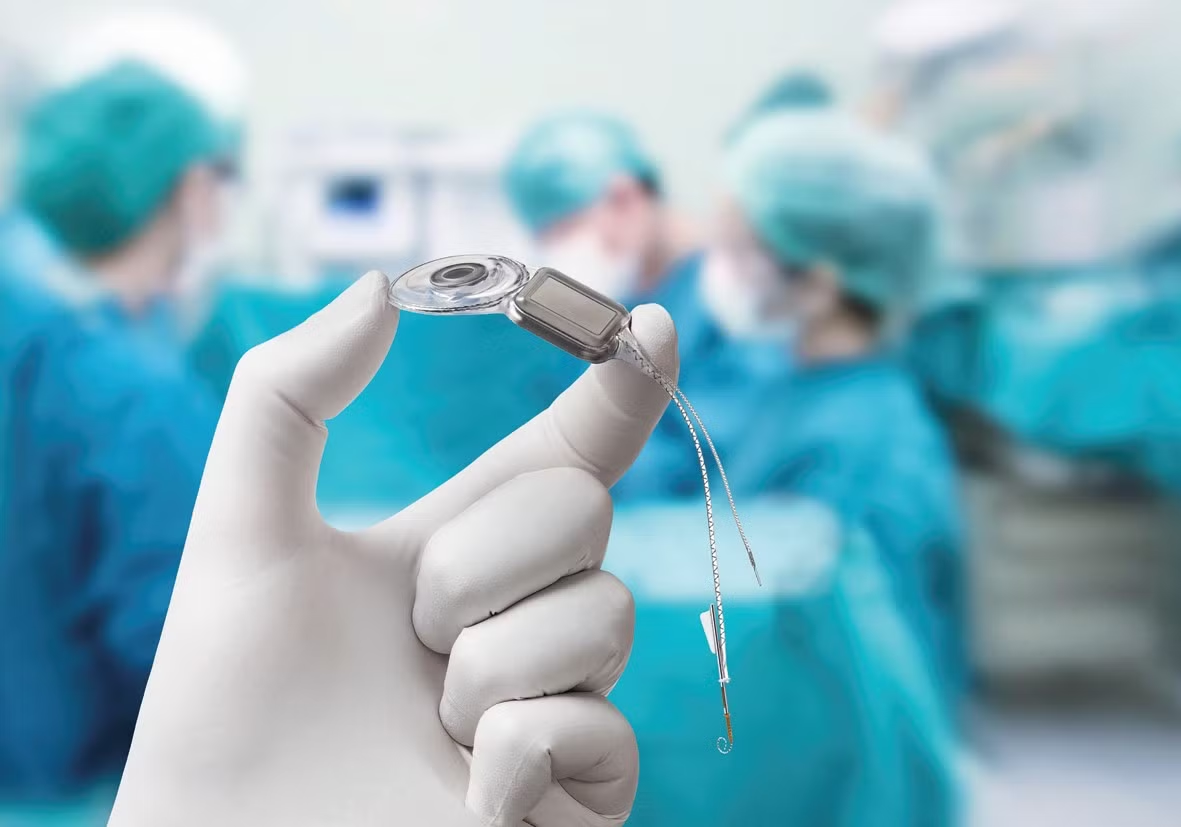
The Real-world evidence fundamentally strengthens product development by replacing assumptions with validated insights that accelerate market readiness. Clinical evidence confirms which product features address genuine clinical needs and predict adoption patterns across different user populations. Usability data reveals how devices perform in actual care environments, enabling targeted design refinements before full-scale manufacturing commitments. This evidence-based approach compresses development cycles by reducing iteration loops—teams make informed design decisions earlier, avoiding costly late-stage changes
From a process engineering perspective, how do you embed flexibility and robustness into development workflows to support rapid innovation?
AI represents the most transformative force already reshaping medtech innovation.
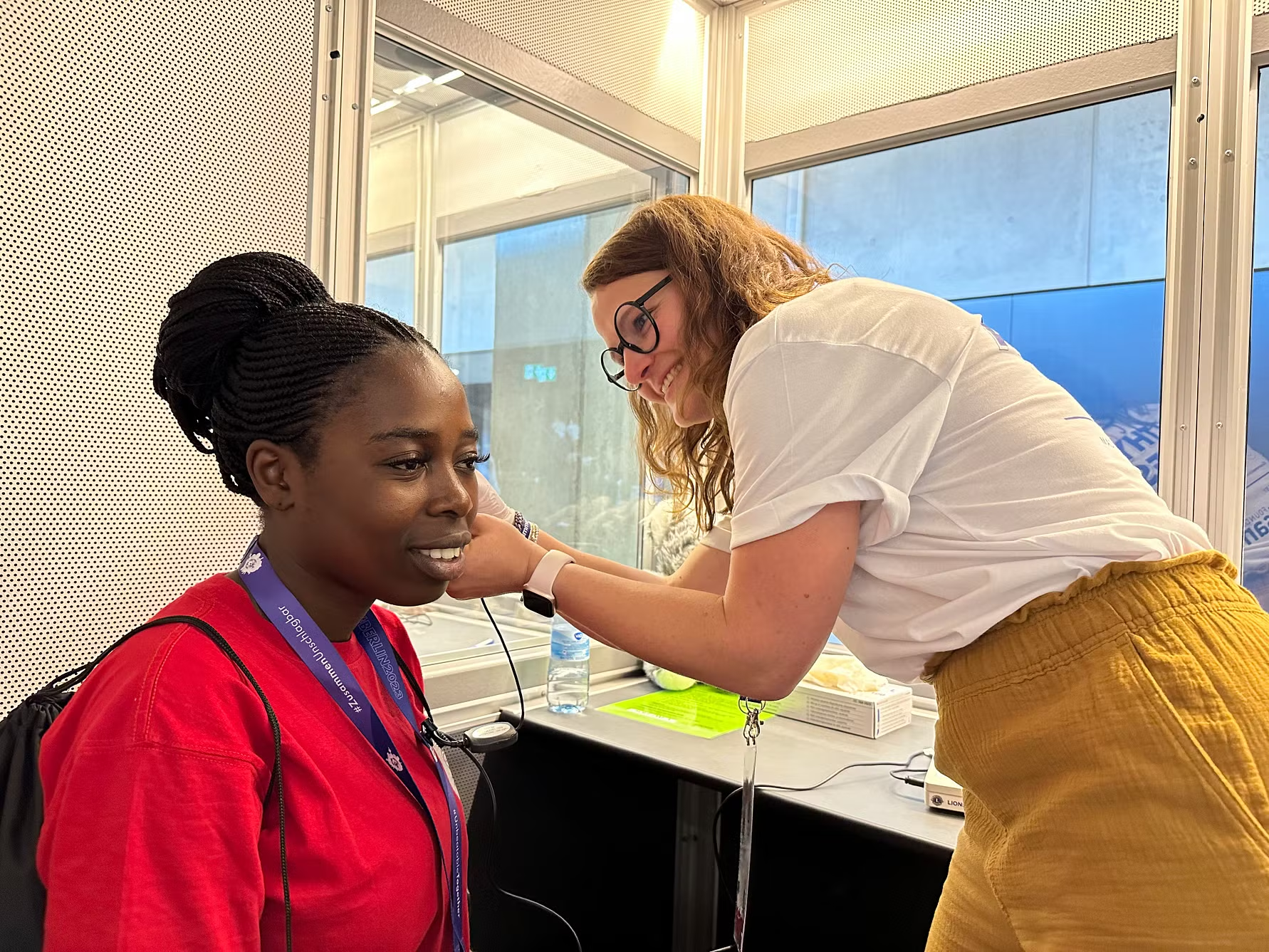
Embedding flexibility without compromising robustness requires disciplined frameworks where emerging technologies are validated in parallel with development, not sequentially. This dual-track approach maintains mandatory quality gates that protect regulatory compliance and patient safety while accelerating process readiness. Clear decision points ensure evidence drives advancement, creating stakeholder confidence through structured governance while preserving strategic space for validated innovation. This enables process engineering to respond nimbly to evolving product requirements without compromising the validation rigor medical device manufacturing demands.
Looking ahead, which disruptive forces do you believe are most likely to redefine medtech innovation over the next decade?
AI represents the most transformative force already reshaping medtech innovation, fundamentally accelerating evidence-based decision-making and deployment speed. Beyond AI, personalized medicine enabled by advanced diagnostics will also redefine competitive advantage.
Conversations strengthen our collective capability to bring life-changing medical devices to patients faster.
Which aspect of the European Medical Device Summit are you most looking forward to?
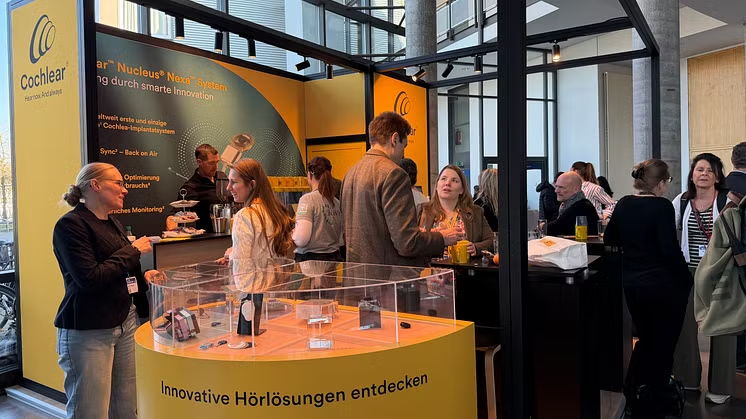
I'm most looking forward to connecting with peers navigating similar supply chain transformation challenges in our industry. Understanding how other organizations balance innovation speed with regulatory compliance offers invaluable perspective. These conversations surface practical approaches and shared experiences that strengthen our collective capability to bring life-changing medical devices to patients faster.
Conclusion
What emerges from Sophie Sheedy’s approach is a clear shift in how medtech organizations must think about execution. It’s not enough to innovate quickly. Success depends on building systems, teams, and decision-making frameworks that can consistently turn innovation into reliable outcomes at scale.
By combining structured governance with a culture that supports open dialogue and evidence-based decisions, process engineering becomes a powerful driver of both speed and stability. The result is an organization better equipped to adapt, deliver, and grow in an increasingly demanding environment.
Attendees at the European Medical Device Summit on 9–10 June will have the opportunity to hear Sophie share these insights firsthand, offering a practical perspective on how to build resilient, future-ready engineering organizations in today’s evolving medtech landscape.
Register now: emdsummit.com

-Jun-22-2026-06-51-53-5530-PM.png)