%20(1).png?width=773&height=112&name=Generis%20Logo%20full%20Colour%20(Large)%20(1).png "Generis Logo full Colour (Large) (1)")
The 3 AM Call No QA Director Wants
Real Batch Record Nightmares and How Smart Technology Prevents Them
We've all heard the phrase, "If it's not documented, it didn't happen." But in pharmaceutical manufacturing, there's an equally terrifying corollary: "If the documentation is wrong, incomplete, or illegible, everything that happened is now suspect."
Every quality professional has lived through at least one batch record crisis: those heart-stopping moments when a simple documentation error threatens to derail production schedules, delay clinical trials, or worse, trigger regulatory action. These aren't just theoretical risks; they're the daily reality of managing paper-based or hybrid batch record systems in an industry where perfection isn't just the goal; it's the regulatory requirement.
Here are three real scenarios that keep quality professionals up at night and how VERISCAN's intelligent batch record management system turns crisis into clarity.
Nightmare #1: The Silent Gap
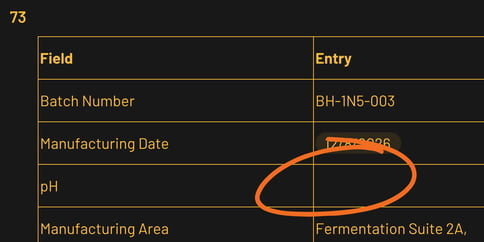
The Scenario
It's Friday afternoon, and you're conducting the final batch record review before releasing a critical batch destined for an upcoming Phase II clinical trial. The trial start date is locked in. Study sites are preparing. Patients are enrolled. Everything depends on this batch shipping on Monday morning.
As you turn to page 73 of the 100-page batch record, your heart sinks. There, in the middle of a process monitoring section, is an empty field. No measurement. No initial. No explanation. Just blank space where critical pH data should be. You check the date and realize the measurement was supposed to be recorded a week ago.
Now begins the scramble. Was the measurement taken and forgotten? Was it taken and the wrong field left blank? Was the entire step somehow missed? The production technician who worked that shift is on vacation. The backup documentation provides no clarity. Your weekend plans dissolve as you coordinate an investigation while executives send increasingly urgent emails about Monday's shipment.
How VERISCAN Transforms This Scenario
With VERISCAN, this nightmare doesn't make it to Friday. It doesn't even make it to Tuesday. When the paper record is scanned in at the end of the shift, the system detects the missing field - within hours of the expected entry time - and immediately triggers an alert to both the production supervisor and QA.
Here's what happens:
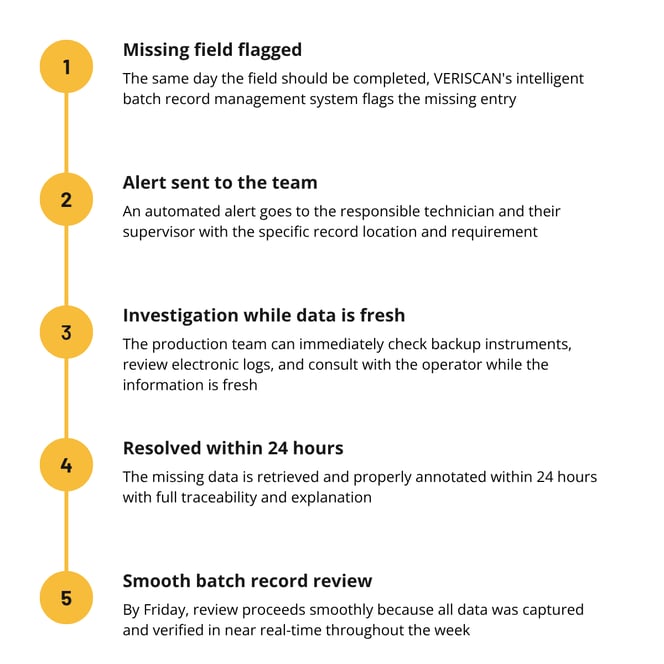
The business impact extends beyond avoided crises. Early detection means:

Nightmare #2: The Mystery of the Missing Label
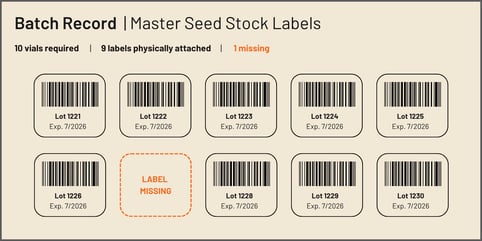
The Scenario
The FDA auditor has been methodical, professional, and thorough. For three days, everything has gone well. Your batch records are organized, your documentation is tight, and your team is confident. Then, on day three, the auditor pauses while reviewing a biological master seed stock usage record.
"Your batch record shows that 10 vials of master seed stock were used," they say, looking up from the document. "But I only count 9 labels attached here. Where's the tenth?"
Your stomach drops. You're certain that all 10 labels were attached. The procedure is clear. Your team is trained. This has been reviewed multiple times during the batch manufacturing process. But now, in front of an FDA auditor, one label is simply...gone.
Did it fall off during handling? Was it somehow removed? Were all 10 vials actually used? The implications cascade: potential batch rejection, deviation investigation, CAPA requirement, possible Warning Letter observation. All because of one missing piece of paper that you can't prove ever existed.
How VERISCAN Transforms This Scenario
With VERISCAN, this nightmare scenario has a completely different ending: one that leaves both you and the auditor satisfied. Here's what happens instead:
The evening the master seed stock was used, each of the 10 labels was physically attached to the batch record as required by procedure. But additionally, at the moment of attachment, each label was scanned into VERISCAN's system. The system captured high-resolution images of all 10 labels, including their barcodes, lot numbers, expiration dates, and timestamps. These digital records were cryptographically appended to the digital record creating an immutable, tamper-evident record of what was attached to the batch record at that moment in time.
When the FDA auditor notices the discrepancy, you can immediately pull up VERISCAN's digital record on a tablet or laptop. There, clearly documented with date and time stamps, are all 10 labels that were originally attached. The system shows:
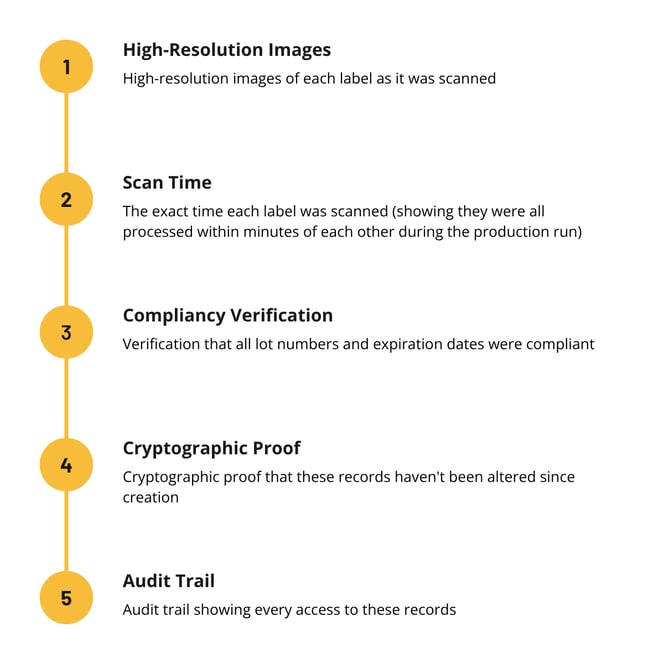
This capability addresses a fundamental challenge in GMP documentation: physical records are fragile and susceptible to loss or damage, but regulatory requirements demand perfect retention and traceability. VERISCAN creates a 'true copy’ – a traceably valid record that exists independently of the physical document's fate.
The benefits extend beyond audit defense:

Nightmare #3: The Illegible Judgment Call
.png?width=478&height=239&name=NIGHTMARE%202%20(1).png)
The Scenario
It's Monday morning, and your QA team is conducting a routine batch record review for a batch produced the previous week. A reviewer squints at a handwritten pH measurement taken during a critical buffer preparation step. The specification is tight: 7.0 ± 0.2. The acceptable range is 6.8 to 7.2. The handwritten value appears to be either 7.1 or 7.7.
If it's 7.1, the batch is in specification and proceeds to final release testing. If it's 7.7, the batch is out of specification which triggers a deviation investigation, potential batch rejection, and all the cascade effects that follow: production schedule impacts, inventory shortages, investigation resource drain, and potential supply disruptions.
You call the technician who made the measurement. They look at the number, now seven days later, and honestly admit: "I don't remember. I took dozens of pH readings that week. The handwriting could be either. I thought I wrote it clearly at the time."
Now you face an impossible choice. Do you assume it's in spec and release the batch, knowing you have incomplete documentation? Do you treat it as out of spec and reject a potentially good batch? Do you launch an investigation that may never reach a definitive conclusion? Whatever you decide, you're making a judgment call based on illegible handwriting and in the pharmaceutical industry, ambiguous judgment calls are exactly what regulations are designed to eliminate.
How VERISCAN Transforms This Scenario
With VERISCAN, this nightmare never gets to Monday morning, it never even makes it past the day of the measurement. The system's advanced optical character recognition (OCR) engine analyzes handwritten entries in real-time as batch records are scanned. When the technician writes what they believe is a clear "7.1," VERISCAN's OCR immediately evaluates the entry.
Here's what happens that day:
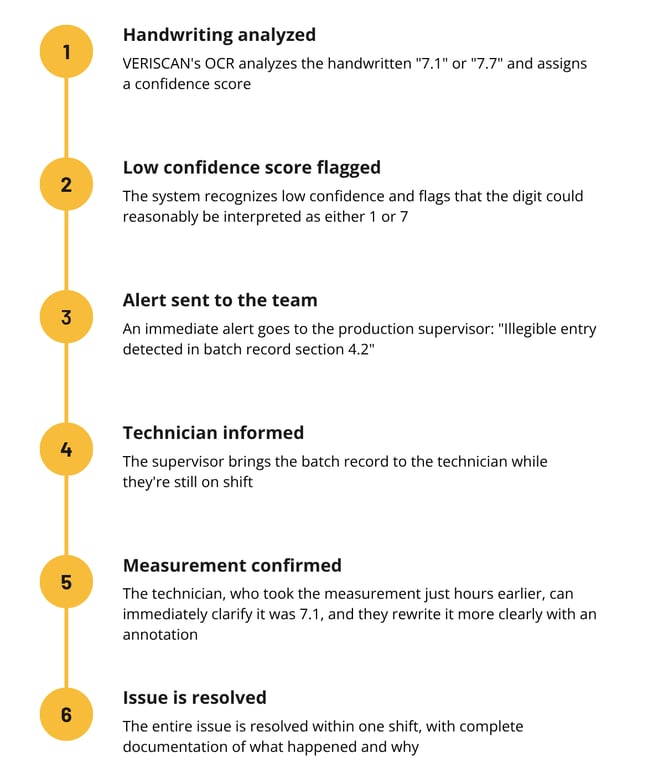
The practical benefits are substantial:

From Nightmares to Best Practice: The Path Forward
These three scenarios aren't edge cases; they're common realities in pharmaceutical and biopharmaceutical manufacturing. Traditional documentation systems, whether fully paper-based or hybrid electronic-paper approaches, are inherently vulnerable to these issues. The consequences aren't just operational headaches; they represent genuine risks to product quality, regulatory compliance, and ultimately patient safety.
What makes these situations particularly challenging is their unpredictability. You can have perfect procedures, well-trained staff, rigorous oversight, and still face these nightmares because they're rooted in the fundamental limitations of manual documentation systems:
■ Delayed detection of errors or omissions
■ Physical fragility and loss of records
■ Variability in handwriting legibility
■ Time lag between execution and review
■ Limited ability to verify documentation completeness in real-time
VERISCAN represents a fundamental shift in how pharmaceutical manufacturers can approach batch record management. Instead of treating documentation as a burden reviewed after the fact, the system transforms it into an active, near real-time quality management tool – delivering not just error and nightmare prevention but a measurably better approach to quality assurance.
The question isn't whether intelligent batch record management is the future of pharmaceutical quality - it's whether your organization will be among those who adopt it proactively or those who come to it after the next avoidable crisis.
Ready to Transform Your Batch Record Process?
See how VERISCAN can eliminate your batch record nightmares and transform documentation from a compliance burden into a strategic quality advantage. Schedule a personalized demonstration to explore how Black Mesa's intelligent batch record management system addresses your specific challenges.
.png?width=419&height=82&name=BlackMesa_logo_horizontal_black%20(1).png)
Contact contactus@blackmesa.com or visit blackmesa.com to learn more.
Black Mesa sponsored the 2026 American Biomanufacturing Summit, which took place at the Hyatt Regency San Francisco Airport, CA from April 14-15.
Learn more at biomanamerica.com