%20(1).png?width=773&height=112&name=Generis%20Logo%20full%20Colour%20(Large)%20(1).png "Generis Logo full Colour (Large) (1)")
Introduction
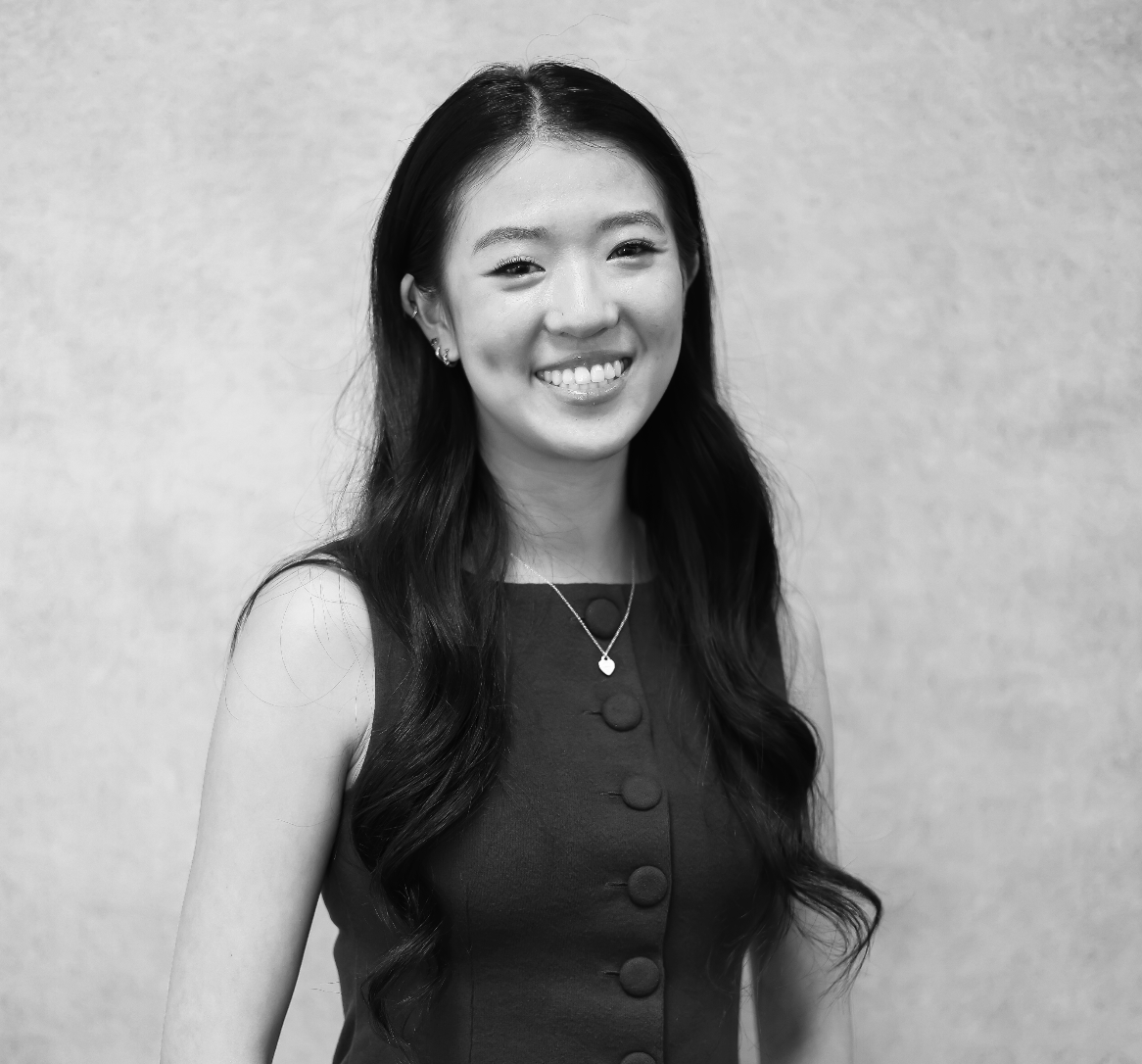
Digital manufacturing is rapidly reshaping how biopharmaceutical products are developed, produced, and delivered, and organizations that succeed are those translating advanced technologies into scalable impact. At the forefront of this transformation is Lisa McEvoy, Associate Vice President of Digital Manufacturing at Merck, who we will have the honor to hear from at the American Biomanufacturing Summit, this April 14-15, 2026, in San Francisco, CA.
Lisa brings a unique global and cross-industry perspective to digital transformation. Originally from Ireland, she relocated to the United States in 2023 and is now based in West Point, Pennsylvania. She has spent the past decade at Merck & Co. (known as MSD outside the U.S. and Canada), following an
extensive career in engineering and project management at The Coca-Cola Company.
.jpg?width=433&height=325&name=IMG_0436%20(1).jpg)
In her current role, Lisa leads Merck’s digital manufacturing value team and is responsible for designing, delivering, and sustaining digital manufacturing
solutions across commercial facilities worldwide. Her work focuses on transforming decentralized shop-floor digital functions into a unified, end-to-end operating model that scales across existing sites and new facilities under construction. By internalizing critical capabilities, anchoring roadmaps to data standards, and embedding AI and robotics, her team is progressing toward autonomous unit operations—while safeguarding uptime, quality, and compliance.
Ahead of her appearance at the summit, Lisa shared her perspectives on digital leadership, transformation at scale, and where true value emerges amid rapidly evolving technologies.
Prior to Merck, you spent many years at Coca-Cola. What lessons from consumer manufacturing have proven unexpectedly valuable in biopharma, and what inspired your transition into biosciences?
What surprised me most was how much two companies in very different sectors have in common. Both have proud legacies that span almost a century and a half, along with a culture that maintains a laser focus on the customer—or patient—in everything we do. There is so much to learn by looking beyond bioscience and studying how other industries operate.
In the digital space, many other industries adopt technology faster, work through challenges, and move toward effectiveness while we are still in analysis. Consumer manufacturing, for example, has invested heavily in automation and digital capabilities as competitive advantages—boosting yield, agility, flexibility, and cost efficiency while maintaining quality. These are the same challenges we face every day.
I’m incredibly grateful for the knowledge and experience I gained from one of the best organizations in consumer manufacturing. Bringing that perspective into our company helped me add meaningful value. One leader even described me as her “walking benchmark” when I joined. At the time, many professionals in the pharmaceutical industry were “lifers,” having spent their entire careers within the sector. I remain thankful to my hiring manager for taking a chance on me and inviting me in.
What does it mean to be a digital leader today when technology is seemingly evolving faster than organizational culture?
To be a Digital Leader is to be a Business Leader—two sides of the same coin. Digital transformation is a lever to drive the business forward, so we must deeply understand our business: its challenges, constraints, and opportunities. The pace of technology change can feel overwhelming, which is why it’s critical to surround yourself with the best and the brightest, and to evolve from change management to stability management so your organization develops the muscles to handle the speed. It’s a broad, deep space—no one person can carry it. It takes a village.
A key skill is discerning hype from real potential—whether it’s AI, robotics, autonomous systems, quantum, or the next new term not yet in our daily vernacular. A clear strategy rooted in business needs helps leaders prioritize urgent versus important, while keeping sight of medium- and long-term goals that require work to start today.
What signals tell you that a transformation initiative is truly embedded rather than just implemented? Particularly, how has your team at Merck demonstrated this?
My litmus test on plant visits is who’s talking about the technology. If it’s an operator, shift supervisor, or lab technician, explaining a business challenge they’ve overcome where digital solutions played a part, we’re on the right path. Conversely, when I’m with our technology team, I expect them to speak in terms of business outcomes—and be as excited about those outcomes as they are about the latest in agentic AI. We deliberately co-create solutions with our business partners for maximum value and implement the right Key Performance Indicators (KPIs) to sustain the change and
provide early warning signals if we drift back to old ways.
Those KPIs also feed continuous improvement—if you don’t measure it, you can’t make it better.
.jpg?width=570&height=380&name=Headquarters_Rahway%20Entrance%20Breezeway_2_LO%20(1).jpg)
Regarding your session, on “Accelerating Digital Transformation Through Integrated Manufacturing and Real-Time Insights”, without giving too much away, how do you determine where AI adds true value versus where it becomes technological noise?
Being a true digital organization means having people who are as business-savvy as they are tech-savvy. We see ourselves as the business. We’ve all lived through “cool tech” projects: big spend, high-fives on go-live, then six or twelve months later, usage drops, processes don’t change or revert, and Excel workarounds reappear.
Our mantra is: simplify, standardize, digitize, and sustain.
Fall in love with the problem statement and the business outcome—that’s the most important thing. With strategic clarity, a strong sponsorship spine from the top floor to the shop floor, and tight collaboration with key business subject matter experts (SMEs), that’s the intersection where value materializes.
What excites you most about the next 5-10 years—both professionally and personally?
.jpg?width=460&height=303&name=Slide-and-microscope_LO%20(1).jpg) The potential. Advancements are arriving so quickly that the next big thing around the corner is becoming the next several things—and there’s a new corner every week. As my family and I get older, these breakthroughs become even more meaningful. It’s hard to believe ChatGPT launched just three years ago, and now GenAI is endemic in our personal lives, too. Agentic AI, Industrial AI, Physical AI—terms we didn’t use less than five years ago. A crystal ball would be amazing to see where we’ll be in ten years!
The potential. Advancements are arriving so quickly that the next big thing around the corner is becoming the next several things—and there’s a new corner every week. As my family and I get older, these breakthroughs become even more meaningful. It’s hard to believe ChatGPT launched just three years ago, and now GenAI is endemic in our personal lives, too. Agentic AI, Industrial AI, Physical AI—terms we didn’t use less than five years ago. A crystal ball would be amazing to see where we’ll be in ten years!
What kinds of conversations are you most looking forward to having with fellow leaders at the American Biomanufacturing Summit?
It’s a powerful opportunity for our industry to come together and share openly. We’re stronger together and can achieve more together. I’m most excited to learn from peers about how they’re advancing biomanufacturing and the big bets they’re making for the next five years.
Conclusion
In an industry defined by rapid innovation and rising complexity, Lisa McEvoy’s perspective offers a powerful reminder that successful digital transformation is as much about people and purpose as it is about technology. Her insights highlight the importance of aligning strategy, culture, and capability to create meaningful, scalable change across global manufacturing networks.
As momentum continues to build around the future of biomanufacturing, we are excited to hear Lisa McEvoy expand on these ideas live at the upcoming American Biomanufacturing Summit. Her session promises to deliver practical perspectives, forward-thinking strategies, and real-world lessons from her leadership in digital manufacturing at Merck. We look forward to welcoming her to San Francisco this April 14-15, 2026, and to the valuable conversations her expertise will inspire.
Learn more about our upcoming 2026 North American events, and secure your spot today:
- American Manufacturing Summit | March 17-18, 2026
- American Biomanufacturing Summit | April 14-15, 2026
- American Supply Chain Summit | April 27-28, 2026
- American Packaging Summit | May 14-15, 2026
- American CIO & Cybersecurity Summit | June 9-10, 2026
- American Electronics & High-Tech Manufacturing Summit | June 16-17, 2026
- ...and more 2027 events!
Subscribe so you never miss another blog!
-Jun-22-2026-06-51-53-5530-PM.png)