%20(1).png?width=773&height=112&name=Generis%20Logo%20full%20Colour%20(Large)%20(1).png "Generis Logo full Colour (Large) (1)")
Introduction
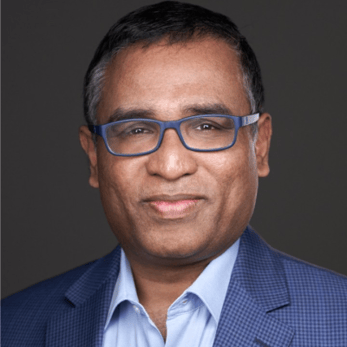
As global supply chains face increasing complexity, from geopolitical disruption to rising demand for speed, transparency, and resilience, AI is rapidly becoming a defining force in the next era of operations. At the forefront of this transformation is Arun Krishnan, SVP, Global Supply Chain and Strategy at AstraZeneca, who is leading the charge in embedding intelligence across end-to-end supply networks.
In this exclusive speaker spotlight ahead of the American Supply Chain Summit, Arun shares how AI-powered “self-healing” capabilities are reshaping decision-making, enhancing visibility, and enabling organizations to move from reactive to predictive and ultimately autonomous operations. From scaling AI beyond pilots to fostering an AI-empowered workforce, his insights offer a practical roadmap for leaders navigating today’s rapidly evolving global landscape.
Your session explores AI-powered self-healing supply chains. What does “self-healing” mean in practice for global operations today?
It’s all about automating decisions. Self-healing means our supply chain can sense, assess, heal, and learn in a closed loop, moving from information to decisions.
- Sense: detect early warning signals from multiple sources spanning orders, inventory, production, shipments, and external risk—so we see issues before they become disruptions.
- Assess: apply rule-based and simulation-driven logic to evaluate options and recommend the safest, most effective response, with clear rationale and confidence levels.
- Heal: execute pre-approved, guard-railed actions (for example, re-route shipments, re-allocate stock, or adjust parameters) to reduce manual work and lead time while protecting patient supply. For complex situations, provide options and incorporate human input to then execute the decision.
- Learn: continuously self-tune lead times, yields, and safety stocks so performance improves every cycle—driving fewer stock-outs and less planner intervention over time.
In short, self-healing turns visibility into safe, explainable action—anticipating, deciding, correcting, and improving so that patients continue to receive their medicines reliably and on time.
Many organizations are investing in AI, but struggle to scale. What foundational capabilities are required to enable AI-driven supply chain transformation?
Scaling AI starts with one source of truth created through clean, connected data and standardized processes so models are learning from reality, not from conflicting inputs. We pair that with a lean, zero-loss mindset where we simplify first and automate second. From there, a modern digital backbone, including advanced analytics, digital twins, and agentic AI, needs to be embedded directly into day-to-day decision-making. Just as important, we invest in enterprise governance, wide-scale AI literacy, change-ready ways of working, and clear ethics and safety guardrails. This combination is what turns isolated pilots into durable enterprise capabilities that reliably protect patient supply.
End-to-end visibility is essential for smarter operations. How does AI enhance transparency across complex, global supply chain networks?
AI turns visibility into action through a closed-loop process of sensing, assessing, healing, and learning. First, we sense early warning signals from a single, consolidated view of orders, production, inventory, shipments, and external conditions—so exceptions surface before they become disruptions. We then assess impact with explainable, simulation-driven recommendations that include the rationale and confidence level behind each option. Where guardrails permit, we heal by executing pre-approved actions (such as re-routing shipments, reallocating stock, or updating parameters), thereby reducing manual work and protecting service to patients. Finally, we learn by self-tuning lead times, yields, and safety stocks, which improves accuracy and reduces planner intervention over time. That’s how AI-enabled transparency becomes resilience you can measure.
With increased automation and decision-making, how should organizations think about the balance between human expertise and AI?

The future of our global manufacturing and supply chains depends on human ingenuity coming together with AI, not one replacing the other.
Across AstraZeneca, we’re building an AI-empowered workforce because advanced systems only deliver their full value when people are equipped, confident, and inspired to use them. That means investing in a truly change-ready culture, broad AI upskilling, and clear principles for AI and data ethics that ensure these technologies are used safely, securely, and responsibly. We’re creating an inclusive, collaborative environment where colleagues can learn, experiment, and lead, with AI safely embedded in how we work.
Rather than viewing human expertise and AI as a balance, organizations should view it as a healthy partnership. Our people set the direction; AI gives them the scale, speed, and predictive power to deliver for patients more reliably than ever. This combination of human potential + intelligent systems is what will define the next era of global supply chains. In the biopharmaceutical sector, that means we’ll be ready to meet the growing expectations of patients and health systems around the world.
Innovation and new product introduction are key priorities. How can AI accelerate innovation while reducing risk in supply chain execution?
Our company has a clearly stated ambition to deliver $80 billion in total revenue and launch 20 new medicines by 2030. We are reimagining our global operations for continued growth and rising complexity, so that our operations are ready to meet patient demand, reliably and responsibly.
To accelerate innovation, we’ve embedded AI across the full value chain—development, manufacturing, and supply—under a single Intelligent Supply architecture. Our AI Development Agent (AIDA) coordinates multiple AI agents to help teams plan, simulate, and converge on robust product and process designs faster, with traceability for scientific decisions. In manufacturing, autonomous controls and factory-flow automation use real-time analytics to stabilize processes, reduce variability, and improve right-first-time performance. In supply, self-healing capabilities translate signals into explainable recommendations and, where guardrails allow, enact pre-approved actions to protect service. Together, these capabilities cut end-to-end lead times, drive productivity, and reduce waste—so new medicines move from concept to reliable, scalable availability with fewer late-stage surprises.

Looking ahead, what excites you most about the future of AI-enabled supply chains, and what should leaders prioritize now?
There has never been a more exciting time to be in healthcare—and there has never been a more exciting time to be at AstraZeneca. What inspires me most is the fusion of human ingenuity with intelligent systems, which will unlock new possibilities across development, manufacturing, and supply, and expand what’s possible for patients.
As leaders, our job is to create the conditions where accelerated innovation can thrive. Three priorities stand out:
- Data and simplification first: standardize processes and connect data so AI learns from one trusted view of reality.
Treating AI as a capability, not a tool - People and trust: build an AI-empowered workforce with broad upskilling and clear principles for AI and data ethics, so adoption is safe, responsible, and enduring.
- Resilience and sustainability by design: treat product availability for patients and reduced environmental impact as twin north stars in every transformation.
After my session at the summit, I hope that leaders walk away inspired and motivated to reconsider what’s possible for their people, society, and the planet.
Conclusion
As AI continues to redefine what’s possible across global supply chains, Arun’s perspective highlights a clear shift from fragmented visibility to fully integrated, intelligent, and adaptive operations. His approach underscores the importance of pairing advanced technologies with strong data foundations, governance, and human expertise to unlock sustainable, enterprise-wide impact.
At the American Supply Chain Summit, Arun will be hosting the Day 1 keynote session, “Future-Proofing Supply Chains: AI-Powered Self-Healing Networks for Smarter Global Operations,” where he will explore how organizations can harness AI to drive resilience, agility, and long-term value in an increasingly complex world.
Learn more about our upcoming 2026 North American events, and secure your spot today:
- American Packaging Summit | May 14-15, 2026
- American CIO & Cybersecurity Summit | June 9-10, 2026
- American Electronics Manufacturing Summit | June 16-17, 2026
- ...and more 2027 events!
Subscribe so you never miss another blog!